

They Weren’t Motivated. They Were Aligned.
A 2,000-year-old fable about a deer, a crow, a mouse, and a turtle — and why it has nothing to do with motivation.
I was re-reading a story I first published in 2017. This is the rewrite. My original heart was in the right place: storytelling is a genuine motivation tool. The problem is that it works because of something deeper and more important.
When you understand why, you can use it effectively every time and never forget it. Plus this blog comes with a bonus little story… that 2,000-year-old fable I mentioned;
Four friends — a deer, a crow, a mouse, and a turtle. The deer gets caught in a hunter’s net. The crow scouts the perimeter. The mouse gnaws through the ropes. The turtle stays close.
The deer is freed.
Simple enough for a motivational poster. Which is exactly why most people miss the point.
What is narrative alignment — and how is it different from motivation?
Narrative alignment is the condition where every person on a team believes they are part of the same story — the same stakes, the same mission, the same definition of what winning looks like.
The animals in the fable didn’t need a pep talk. No all-hands. No culture deck. No team-building retreat.
The crow flew because that’s what crows do. The mouse gnawed because that’s what mice do. The turtle stayed close because that’s what turtles do.
Every animal knew their role in a shared story — and no one was confused about whose job it was.
That’s not motivation. That’s alignment. And they are not the same thing.
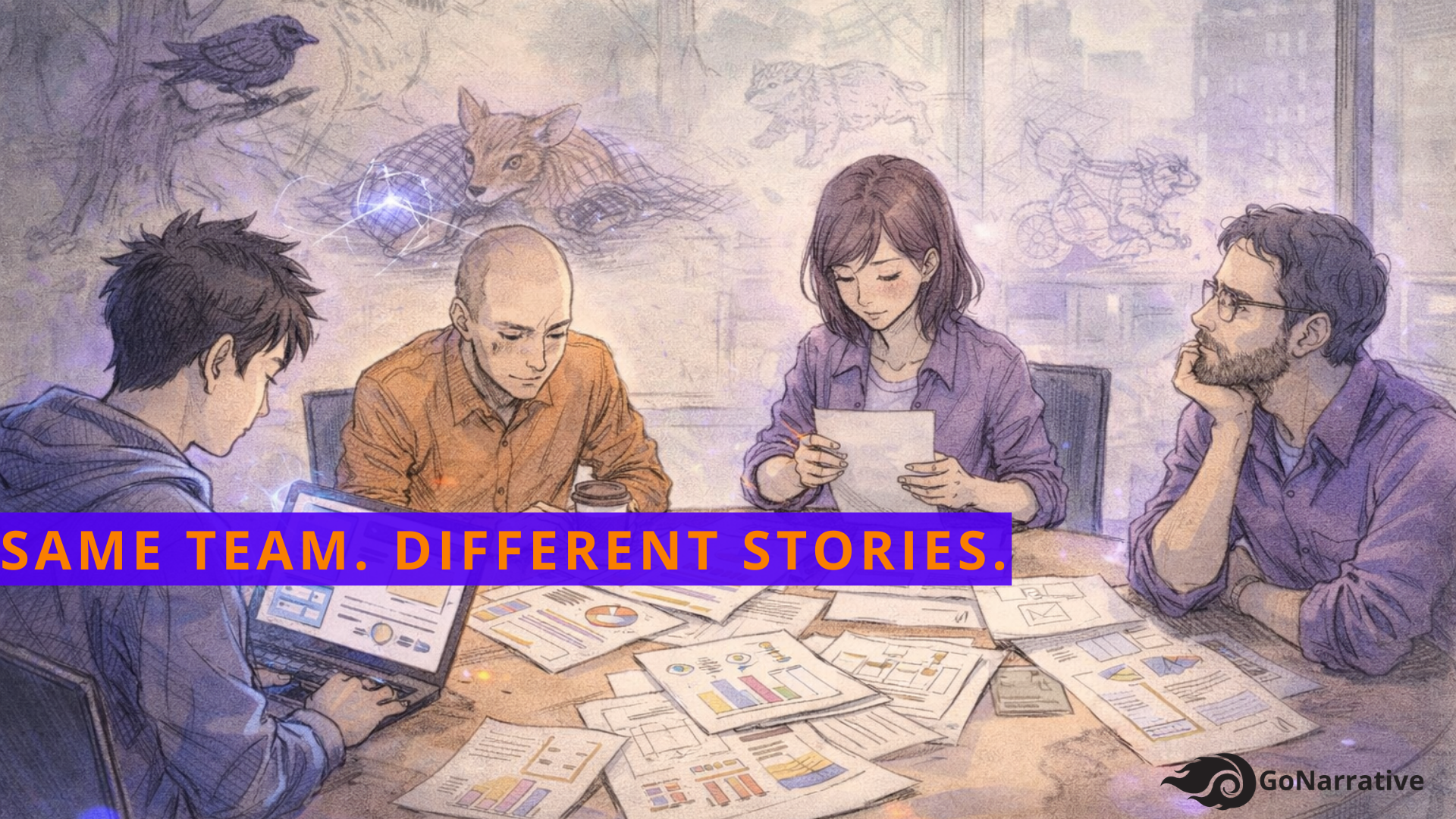
Why do teams look unmotivated when the real problem is something else?
In my work with post-Series A founders, I see this pattern constantly.
Four people in a meeting. All are working hard. None of them is unmotivated. And yet the company moves slowly, decisions loop, and the founder walks out of every all-hands feeling like nothing stuck.
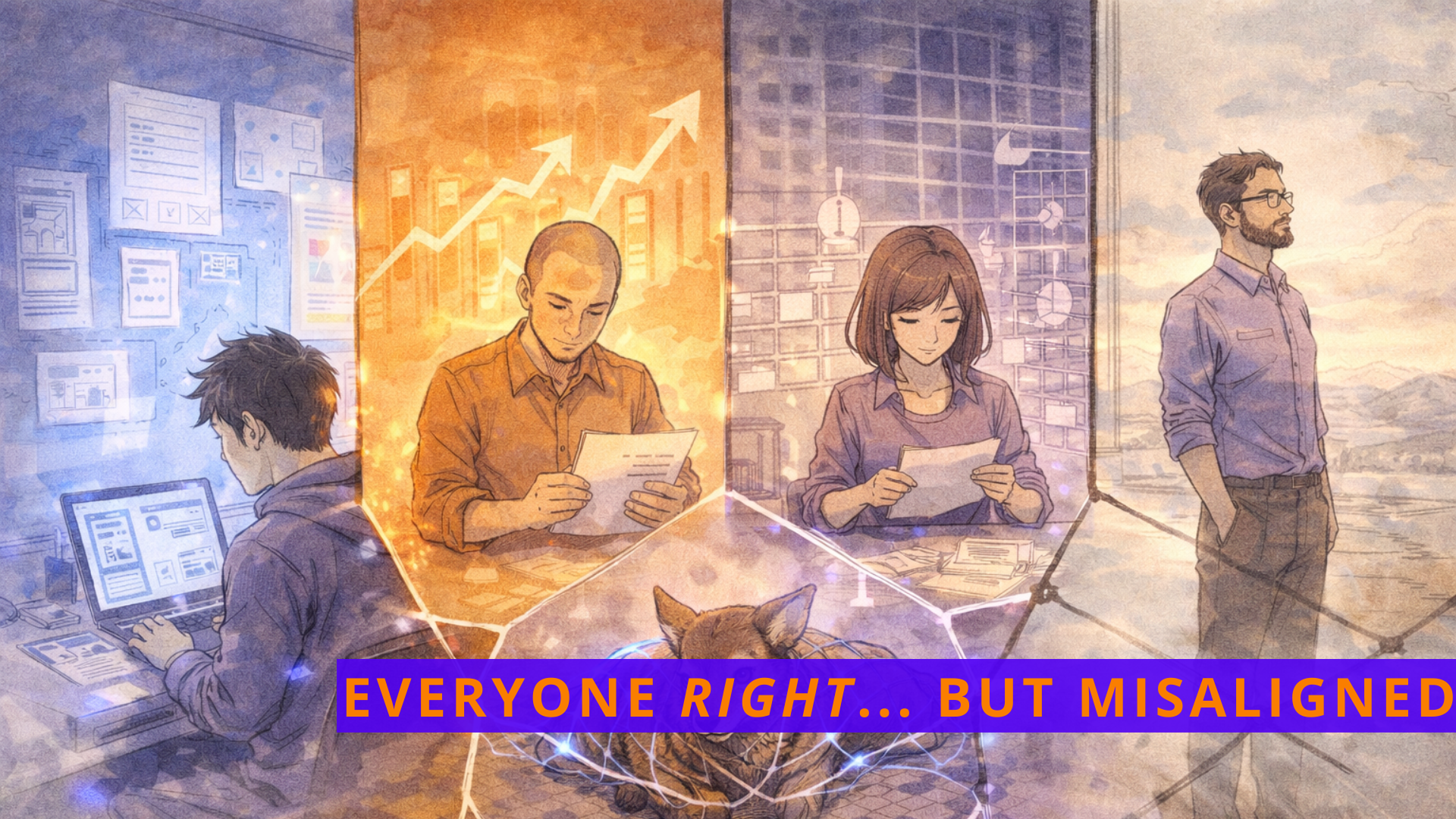
Pull back one layer and here’s what you find: each person is narrating a different version of what the team is building, for whom, and why it matters right now.
The design team is telling a story about craft and quality.
The growth team is telling a story about speed and acquisition.
The ops lead is telling a story about stability and process.
Nobody is wrong. Nobody is disengaged. They’re all working hard.
Just not in the same story.
Most team dysfunction gets labeled “low motivation.” The fix is usually a new ritual, a better manager, a stronger culture document. That’s treating the symptom. The problem is a narrative alignment problem — and it doesn’t respond to motivation solutions.
What is the Core Lore problem?
Core is the company’s strategic story: why you exist, who you’re for, what you’re building, and what it costs you if you fail. It’s the shared set of beliefs that makes decisions portable — so your team can act without you translating every time.
Lore is everything built on top of it. Customer conversations, demos, decks, Slack messages, how sales describes a win. Your team builds lore constantly, whether you plan for it or not.
The Core Lore problem is this: when the core is clear and shared, lore compounds. Everyone extends the same story in their own direction. Alignment feels effortless.
When the core drifts — when different parts of the team are operating from different versions of the foundational story — lore fragments. You get three versions of the company circulating simultaneously, and the founder becomes the only person who can feel the gap.
"We must indeed all hang together, or most assuredly, we shall all hang separately." — Benjamin Franklin
Franklin wasn’t calling for enthusiasm. He was calling for shared stakes. Enthusiasm is a feeling. Shared stakes are structural.
The animals in the fable had shared stakes. When the deer got caught, the rest of them were one snapped twig from the same fate. You can’t manufacture that feeling with a motivational story. What you can do is build the conditions for it — by making sure everyone is reading from the same core.
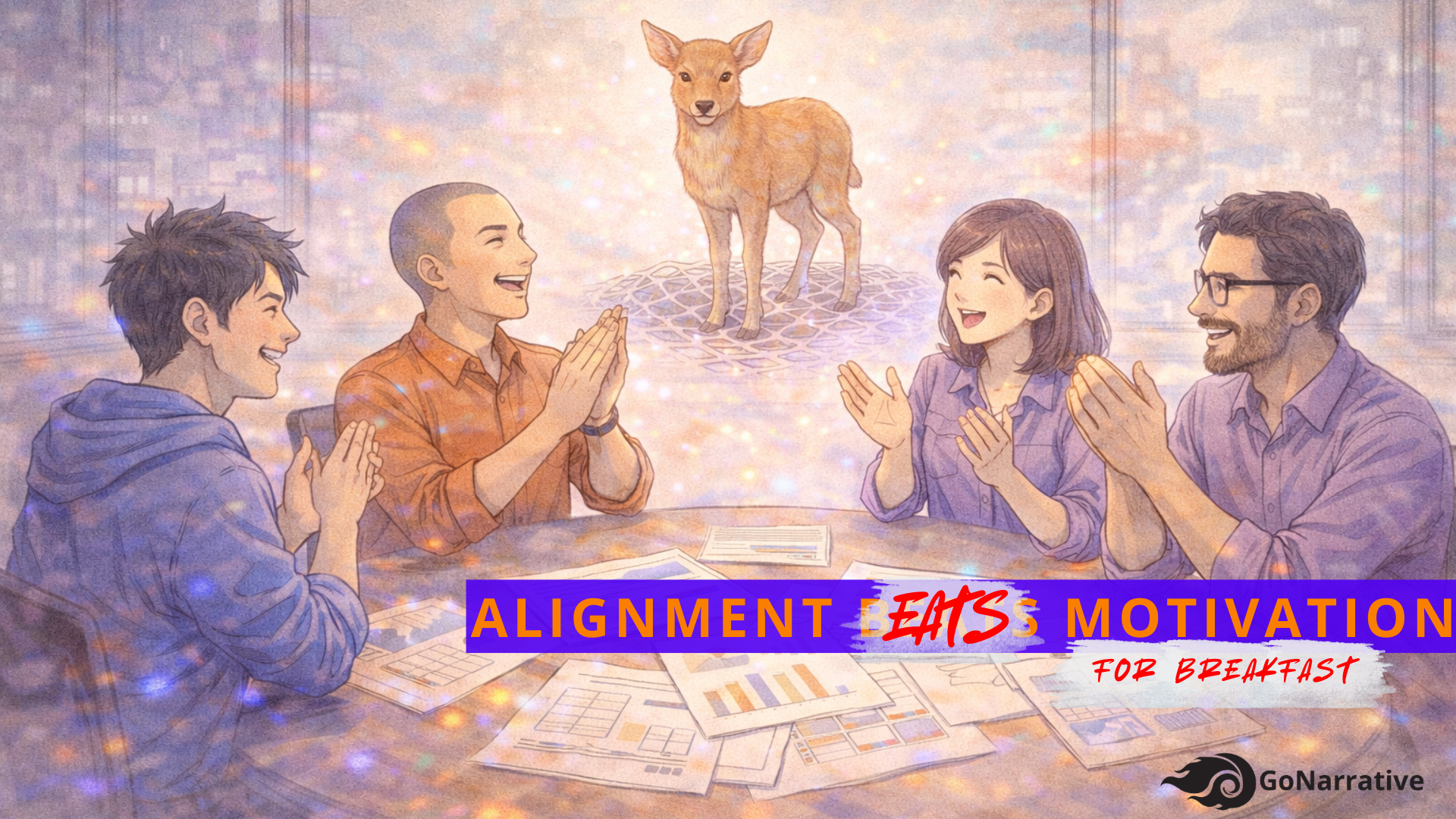
How do you know if your team is aligned or just busy?
One test. No preparation required.
Ask five people on your team: “What are we building, and why does it matter right now?”
Don’t prime them. Don’t give them a framework. Just listen.
If the answers rhyme, you’re aligned.
If they don’t, you have a story problem. And story problems have story solutions.
The original question most founders ask is: What story should I share to inspire my team?
The better question is: What story does my team already believe they’re in?
Because the story they believe — not the one you presented at the all-hands — is the one that determines what they do on Tuesday at 2pm when nobody’s watchin.
If your team is working hard but pulling in different directions, the gap is almost never about effort. It’s about the story. Book a 20-min narrative diagnostic to find out where yours is breaking.
If the story only works when you're in the room, that's a symptom.
Book a Narrative Diagnostic