

Simple Core, Infinite Lore
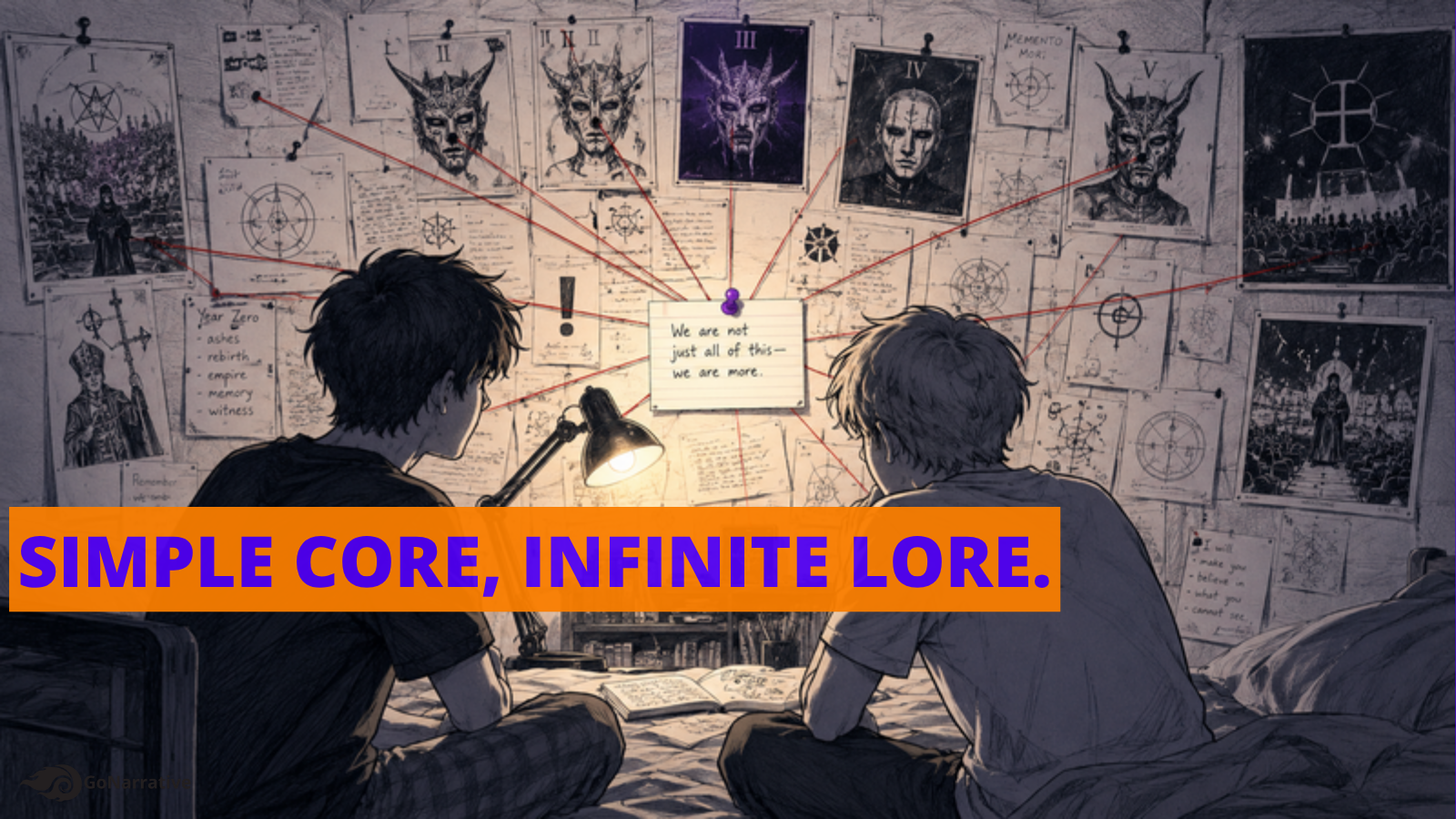
When Breach came out in the fall of 2025, our family disappeared into it.
Past the songs, into the world itself. Each track a micro-story, full of symbols, characters and Easter eggs. The kids would surface at dinner with theories. We’d trade lines from RAWFEAR like currency. And underneath a decade of masks, rebellion, and mythology, every one of those threads ladders up to a single question:
Will Clancy escape Dema?
That's the core. Everything else (five albums of it, ten years of it, an entire fan-built encyclopedia of it) is lore.
I probably should say why Twenty One Pilots gets to be the example here…
I needed music that told the truth when my brain was loud and life was messy. Many songs felt polished but distant. That was the wall. Twenty One Pilots didn't flinch. They name the anxiety, the grief, the inner debate… and still choose hope. That combo saved me more than once and helped me keep going. So, when I reference them, it means something, it's a signal: clarity with courage scales.
And there's a business lesson buried in that fandom. It's the one too many Series A founders heading towards Series B learn too late.
What’s the Difference Between Story and Storytelling?
Great storytelling has two layers that founders blur.
Story is the noun: your one-paragraph truth. Clear. Repeatable. The thing you want echoing in rooms you're not in.
Storytelling is the verb: all the ways you express and expand that truth through decks, content, demos, and conversations.
The band has the noun nailed. One sentence, held steady for a decade. That's what made the verb (the videos, the hidden websites, the cryptic liner notes, the random fan mailers) compound instead of confuse. When a thread is unbroken you can follow it to infinite depths. Fans did.
Most companies run this in reverse. They generate the verb constantly, assuming the noun is underneath. Then they scale, and find out it wasn't.

Why Does Your Story Fragment as You Grow?
Between Series A and Series B, the round is the smallest thing you're selling. The bigger sale is alignment: to your team (why we're here), your market (why we're different), your future hires (why join now).
And right at that moment, the surfaces multiply. The investor deck tells one version. Sales drifts in another, one adapted pitch at a time. The team Slack shows a dozen competing philosophies. It accumulated: headcount doubled, then doubled again, and every new voice inherited a slightly different copy.
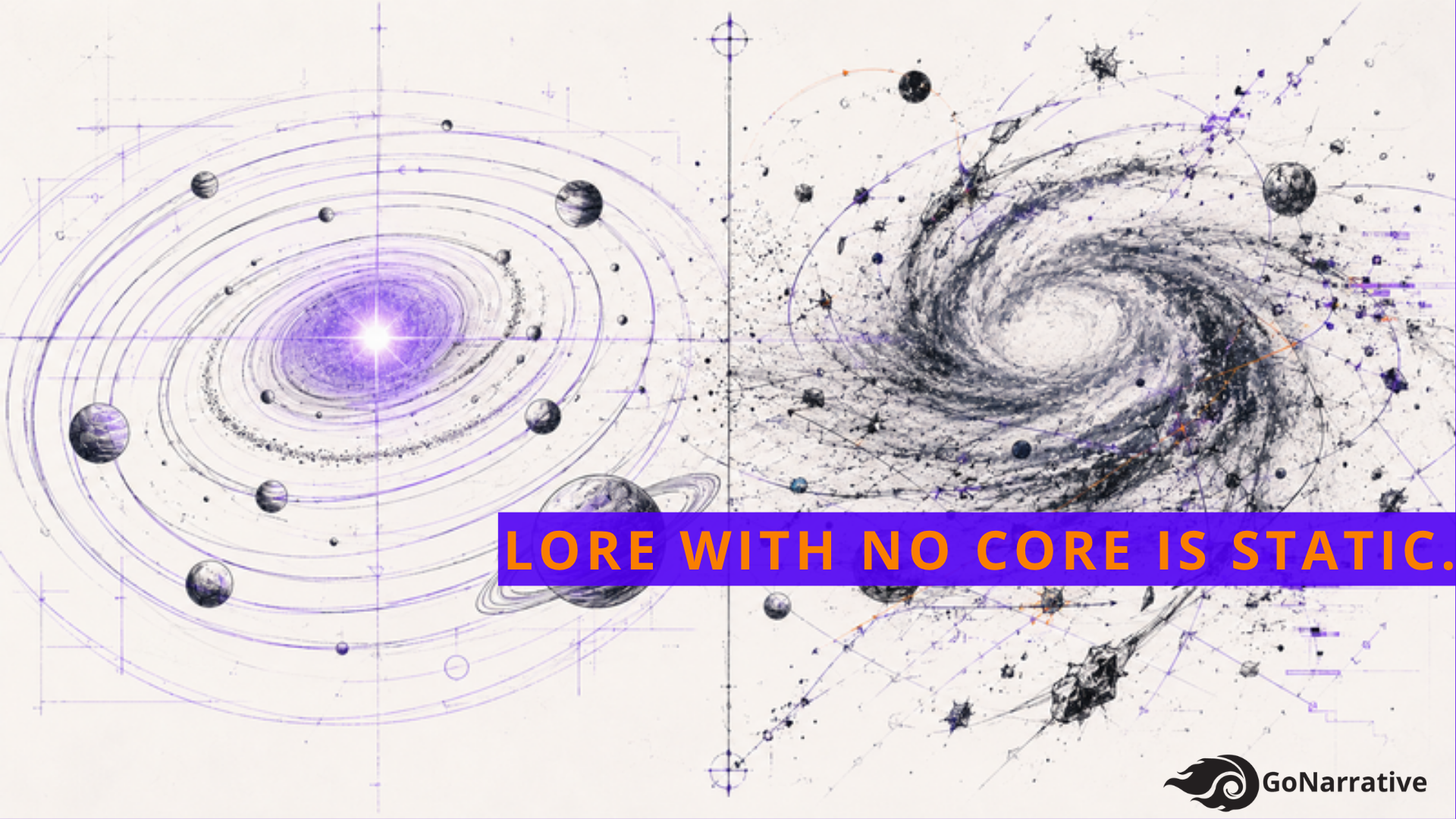
Here's the part that stings: all of that output is lore. Product stories, customer vignettes, feature pages, origin tales. Lore is good. Lore is how a story gets rich. The problem is when you have lore with no core… nothing to trace back to.
Lore only works when the core is unbreakable. That's true of a band's decade-long universe, and it's true of your company.
What Is a Core, Actually?
Not a tagline. Not a positioning formula. Not something you fill in like a tax form.
Your core is the belief structure your company operates from: who this is for, what's actually in their way, what changes when you win, and the tradeoffs you're enforcing to make that true. Compressed until it fits in one paragraph a stranger could carry.
Two guardrails keep it honest:
If a sentence in your deck can't be traced back to the core, it's lore run amok. Cut it or park it.
If two smart people read your core and argue about what you do, it isn't core yet. You have work to do.
Does Your Company Pass the Fandom Test?
When the core holds, the culture (i.e. people) surrounding your company starts behaving like a healthy fandom.
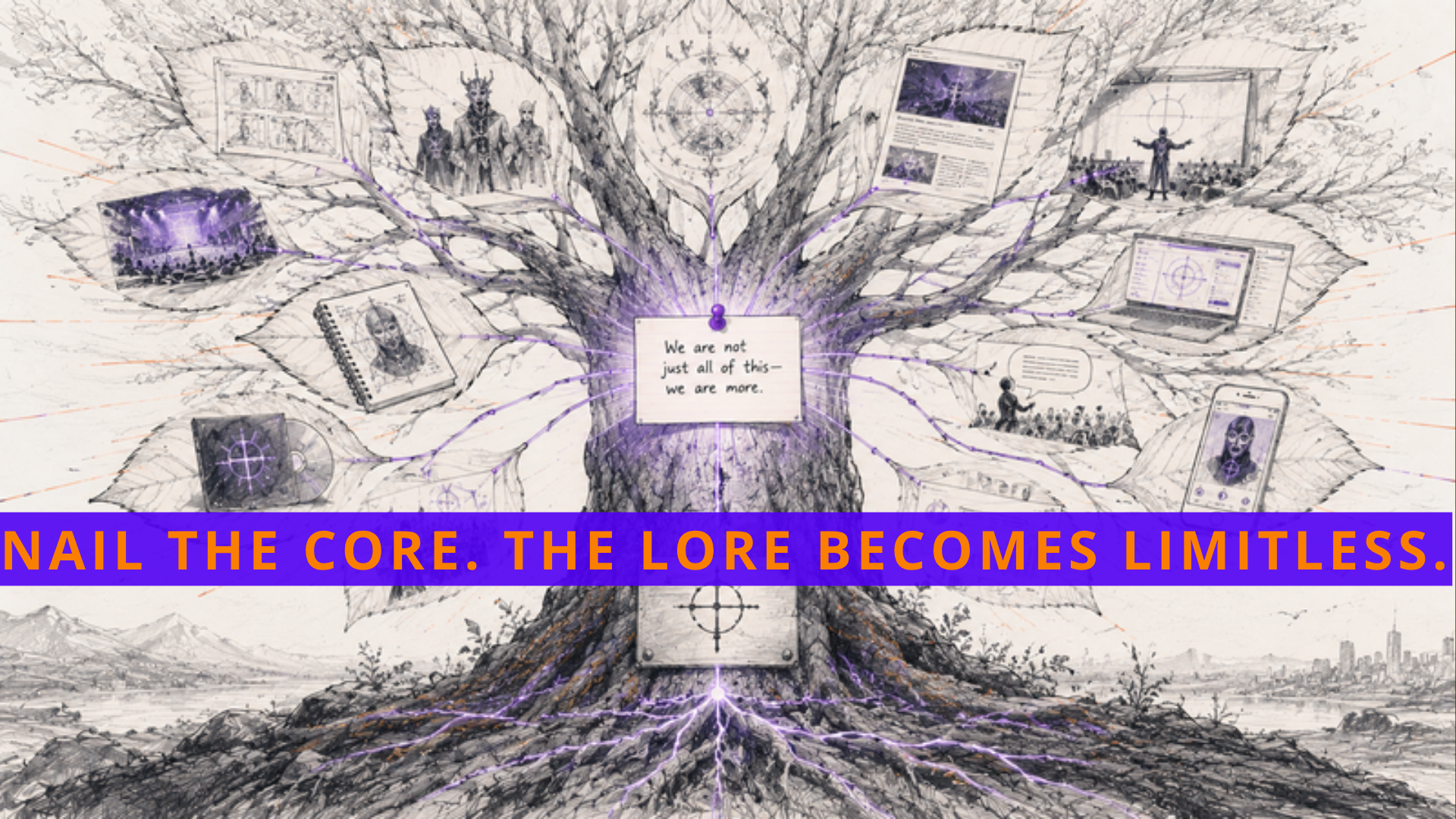
People can enter from anywhere (a podcast, a referral, a cold email, slide four of someone else's forward) and recognize where they are. Each additional touchpoint deepens the same truth instead of opening a new argument. And the story starts showing up in rooms you're not in, retold in other people's words, still recognizably yours.
One caution before you start building your expanded universe: fandoms reward sprawl. Business rewards clarity. Twenty One Pilots could afford Easter eggs that took fans years to decode. Your buyer gives you five minutes. Don't build the mythology until the canon is bulletproof.
How Do You Stress-Test Your Core?
Could a new hire repeat your core tomorrow, without the deck?
Could a customer retell it without your slides in the room?
Could an investor pitch it back to you accurately, a week after the meeting?
Three different versions from three smart people means you're not there yet. Treat it as a diagnosis. Catching it now is cheaper than catching it in diligence.
What’s Your One Sentence?
If your company had to be distilled into one sentence (the one you'd want every investor, customer, and teammate repeating back to you), what would it be?
That's your core.
And once you nail it? The lore becomes limitless.
Can't get your core into one paragraph? Book a 20-minute narrative diagnostic. Compressing it is exactly what I do.
Not ready for a conversation? Take the narrative assessment first.
If the story only works when you're in the room, that's a symptom.
Book a Narrative Diagnostic