

Be Like Branson: Business Storytelling Lessons from the Story Master

Richard Branson is the undisputed master of business storytelling. With his uncanny ability to turn even the most mundane business ventures into compelling narratives, Branson can easily capture the public's imagination and garner massive amounts of publicity every time he speaks.
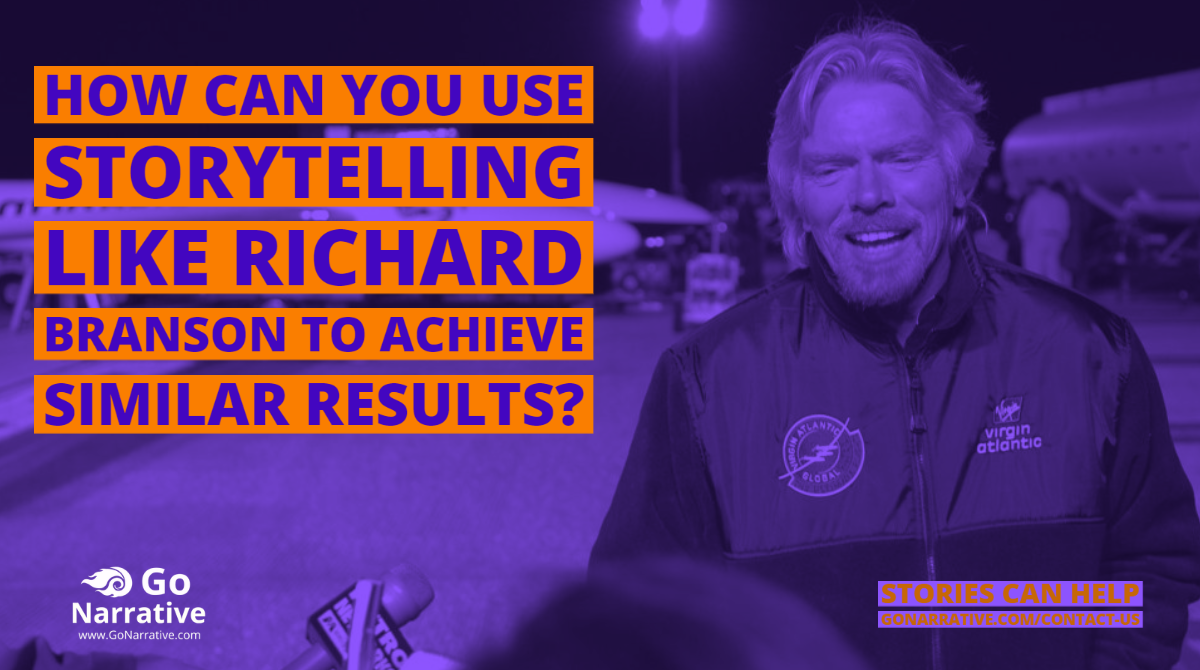
But what is it about Branson's stories that make them so captivating? And how can other businesses use storytelling to achieve similar results?
The answer lies in understanding the power of storytelling and using it to your advantage.
I’ll admit I struggled with this early in my marketing career. After pivoting away from engineering and into tech product marketing, I found myself as the Chief Storyteller at Microsoft Dynamics. I was tasked with creating compelling stories that challenged the status quo, but I got stuck when I tried to apply “classic” storytelling frameworks that I’d learned as a budding fiction writer and filmmaker to the world of business.
It wasn’t until I dove deeper into the art of storytelling and discovered the essence of why humans are hardwired for story that I understood the secrets and lessons I’m about to share with you. Richard Branson “got it” too — and that’s why I’m holding him up as a prime example of what every business storyteller should do.
3 ways to leverage business storytelling
Based on Branson’s success in the storytelling arena, here are three key strategies that can help your brand stand out and get ahead.
1. Use stories to create a sense of urgency.

Branson has an incredible knack for creating a sense of urgency and excitement around his products and services. He understands that people are more likely to take action if they feel like they're going to miss out on something special and uses that to shape his story’s narratives, intriguing his audience and getting them excited for what’s to come.
“Create a sense of urgency, not complacency,” Branson said. “Creativity, efficiency, and productivity will follow.”
Through the power of storytelling, Branson has shaped powerful narratives for his many business ventures and personal brand, effectively demonstrating and selling his products to an excited and interested audience. For example, when Branson launched Virgin Atlantic, he created a sense of urgency by offering bargain fares for a limited time only. This generated a massive amount of publicity and helped Virgin Atlantic become one of the most successful airlines in the world.
2. Use stories to differentiate your brand.
It’s more important than ever to differentiate your brand from the competition, as the market is saturated with companies vying for customers' attention. To stand out, brands should harness the power of storytelling to communicate what makes your brand unique.
“We would be nothing without our story,” Branson said.
When Branson started Virgin Atlantic, he positioned it as the “fun” alternative to stuffy British Airways. Creating this story and building this perception around his airline helped it stand out in a crowded marketplace and become one of the most iconic brands in the world.
In all his ventures, Branson has followed his own path.
“You don’t learn to walk by following the rules,” Branson said. “You learn by doing, and by falling over.”
Businesses often follow in the footsteps of others, believing that the way things are done is the “correct way.” However, Branson has built his empire by consistently following his own path. In doing so, he has produced innovative ideas and creative storytelling methods that many businesses wouldn’t dream of pursuing.
“If you want to stand out from the crowd, give people a reason not to forget you,” he said — and one way to not be forgotten is through the power of storytelling.
3. Use stories to build an emotional connection with your audience.
People are more likely to take action if they feel an emotional connection with your brand — and that connection can be built through stories that demonstrate a brand’s values and allow the audience to see your brand in a positive light.
“Entrepreneurs who make a difference are, in effect, professional storytellers,” Branson said.
For example, when Branson started Virgin Records, he positioned himself as the underdog fighting against established record labels. Understanding that people relate to people, Branson strategically positioned his company in a light that built an emotional connection with an audience who appreciated his maverick spirit and supported Virgin's success.
“Throughout the more than 40 years Virgin has been in business we have been continuously striving – striving to deliver wonderful products and services, striving to make a positive difference, striving to change people’s life for the better,” Branson said. “Had we not kept striving, we certainly wouldn’t be where we are today.”
Why tech brands should emulate Branson’s storytelling methods
Storytelling, or “the act or art of narrating incidents or events," can be a very powerful tool for tech brands around the world. Many brands share stories to persuade customers into making purchases by helping them visualize how they fit into the story and how the product solves their needs.
As I’ve stated numerous times before, communicators who are only interested in getting their point across are ineffective. To sell more products, tech brands need to use storytelling — and incorporate the 3D Story™ model of Desire, Difficulty, and Denouement — to create a narrative that resonates with their audience and gets them interested, drives home the brand’s message, and aids in the explanation of any difficult concepts. A good communicator will show their audience (but not tell) how their product can add value to their lives by putting themselves inside the communicator’s story.
With storytelling, tech brands are brought to life. Brand stories — particularly stories about those who have overcome great odds — humanize a brand by allowing audiences to connect with the organizations and employees and demonstrate the commonalities between them. With brand stories, customers learn more about the people behind the company, helping it to stand out amongst competitors in a memorable way, boost customer loyalty and motivation, and increase the number of products sold.
A word of warning: Don’t try to follow Hollywood

When most people think about storytelling, they think about Hollywood blockbusters with big budgets and special effects. But you don't need a huge budget or CGI dragons to tell a great business story. In fact, trying to follow Hollywood often backfires because it comes across as inauthentic.
Instead of trying to copy what Hollywood does, focus on being authentic and relatable. Share stories from your personal experience, from your customers' experiences, or from your employees’ experiences. Not only will these types of stories resonate more with your audience and help to build trust, but it will empower your audience to act and increase engagement with your brand.
In conclusion…

Storytelling is one of the most powerful tools in a business's arsenal. When used correctly, it can help you create a sense of urgency, differentiate your brand, and build an emotional connection with your audience. If you want to be successful in business, learn from the master storyteller himself, Richard Branson, and start using storytelling to your advantage today.
Ready to be more like Branson with your business storytelling strategy? Book a complimentary consultation with Go Narrative. During this no-strings-attached call, you’ll learn more about our storytelling tools and frameworks which you can use to improve your business’s narrative.
If the story only works when you're in the room, that's a symptom.
Book a Narrative Diagnostic